Spacewar! From DOS to Web
Reverse-engineering a 1985 DOS binary to get the physics right in a web recreation. A story about obsession with authenticity.
The amber glow
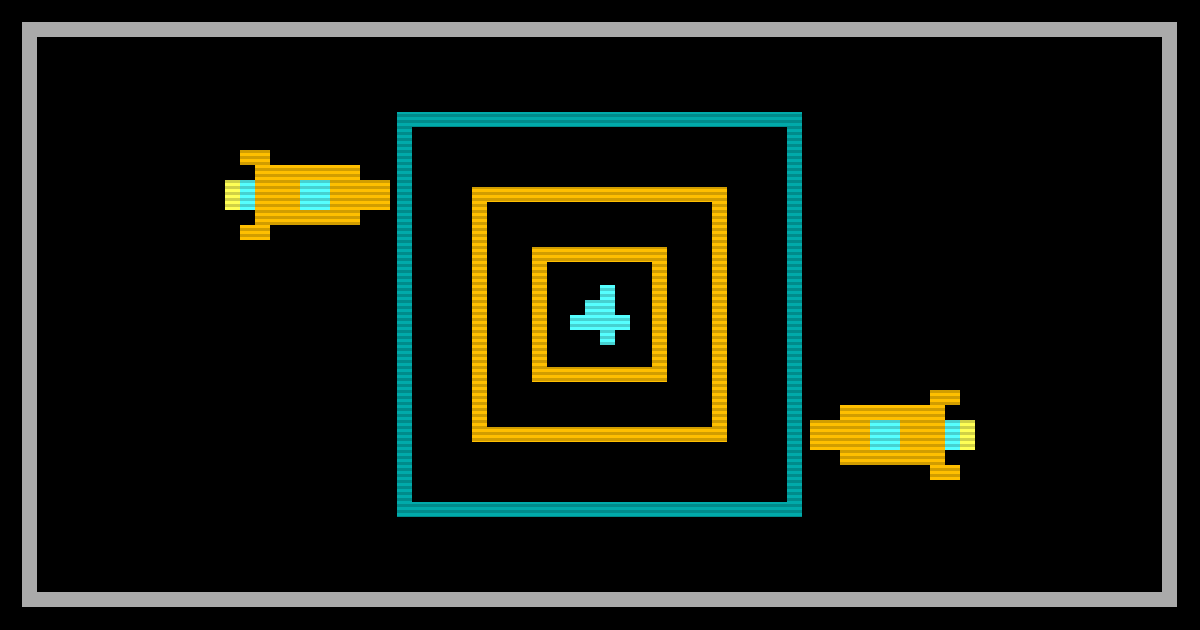
Some games imprint on you. Spacewar! hit me through an amber CGA monitor in the late eighties — two ships, a star, and Newtonian physics rendered in monochrome. Bill Seiler's 1985 DOS adaptation of the . I never forgot the weight of those ships.
In 2015 I tried to recreate it in Haskell. The project stalled — . A decade later, in October 2025, I came back with a simpler idea: one HTML file, one JavaScript file, no build system. Just Canvas 2D and the Web Audio API.
Single-file architecture
The entire game lives in game.js — around 3,000 lines. . This was deliberate. The original ran as a single binary. The recreation should feel just as self-contained.
Key decisions from the first week:
- CGA amber monochrome —
#FFAA00on black, matching the original DOS palette - Toroidal space — screen wrapping with
- Web Audio API — all sound effects synthesized in real-time, no audio files
- RequestAnimationFrame loop with
By the end of the first week, the DOS-style interface with cycling demo screens was working, and core mechanics — torpedoes, phasers, thrust, cloak, hyperspace — matched the original game parameters.
Chasing authenticity
Getting the look right was one thing. Getting the feel right took months.
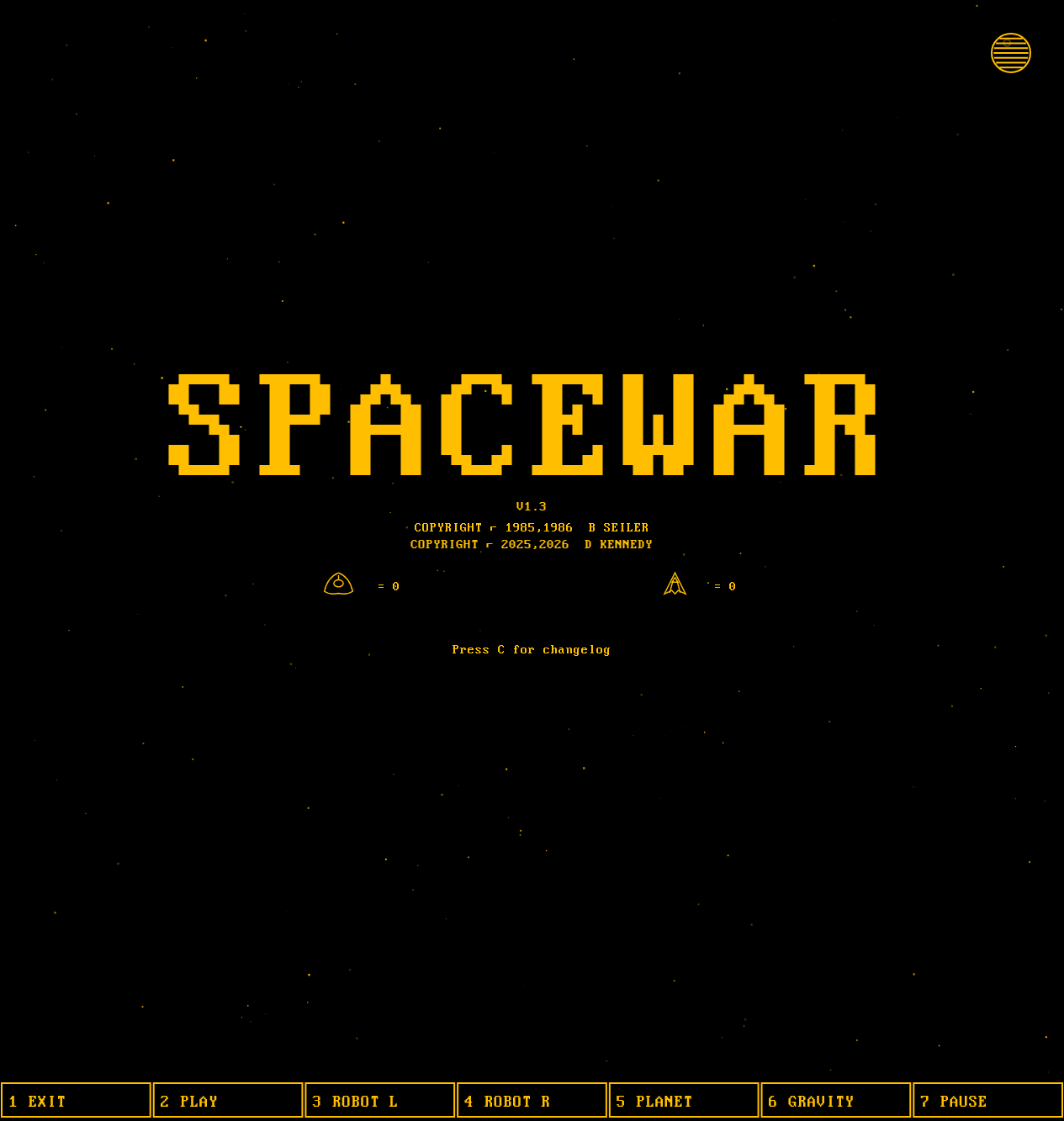
Phase by phase, the game grew more faithful. Realistic torpedo ballistics replaced placeholder physics. The title screen earned a . Press Start 2P font was swapped for actual . The HUD got blinking shield bars at critical levels.
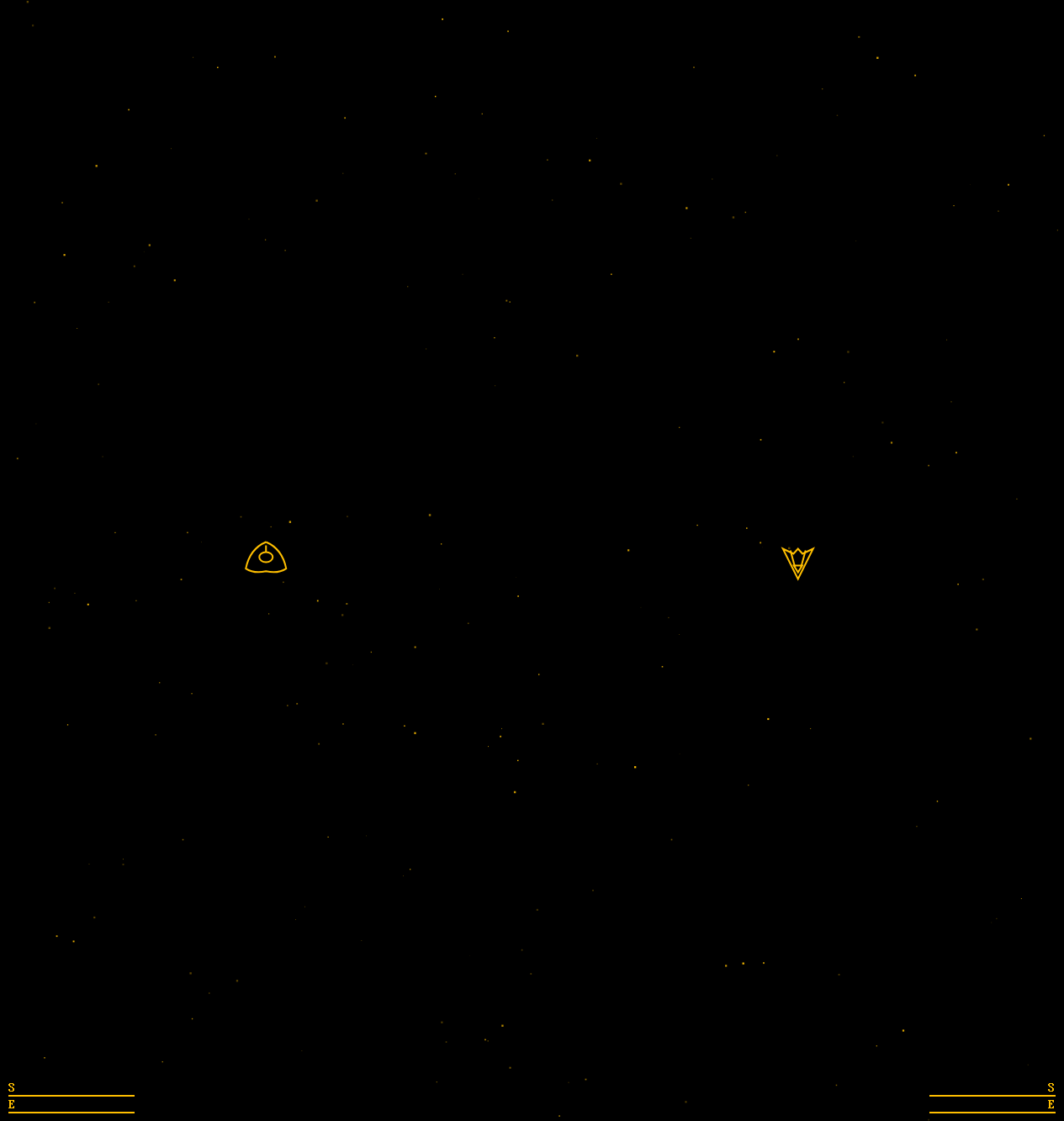
The audio deserves its own mention. Every sound is generated through the . The Pretzel ship hums differently from the Triangle ship. Phasers sweep. Torpedoes pop. It sounds like a DOS game running through a PC speaker, which is exactly the point.
The physics deep-dive
After months of polish, the ships still felt wrong. Too twitchy. Too fast. You could spin on a dime and rocket to full speed in half a second. Time to go back to the source.
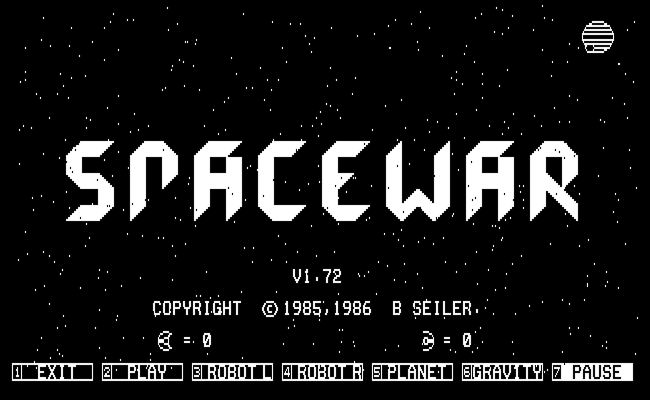
I reverse-engineered the original SPACEWAR.EXE v1.72 binary to extract the exact physics parameters. The findings surprised me.
— rotation was nearly perfect already, but thrust acceleration was 3x too fast and max speed was 50% too high.
The fix was a single commit. The result: ships now feel weighty and deliberate. Full rotation takes ~2.6 seconds instead of 1.7. Reaching top speed takes ~1.7 seconds instead of 0.6. Combat becomes strategic — you plan your turns and commits instead of twitching your way out of danger.
This was the moment the game stopped being a recreation and started being a faithful recreation.
Current state
The game is live at spacewar.dmnc.tech with . You can play against a friend on the same keyboard or watch two AI ships duke it out in demo mode.
What started as a nostalgia project turned into an argument about what faithful even means. You can match the amber, synthesize the beeps, and extract the fonts, and the thing still won't feel right until you go to the binary and find out the ships were never sports cars — they were freighters, and the weight was the whole point. Every detail I chased was the same question in disguise: is this Spacewar!, or a space shooter wearing its clothes? Two physics constants settled it.
Next up: gamepad support, touch controls, and eventually online multiplayer. But first — the Apple TV port. That story is its own post.